

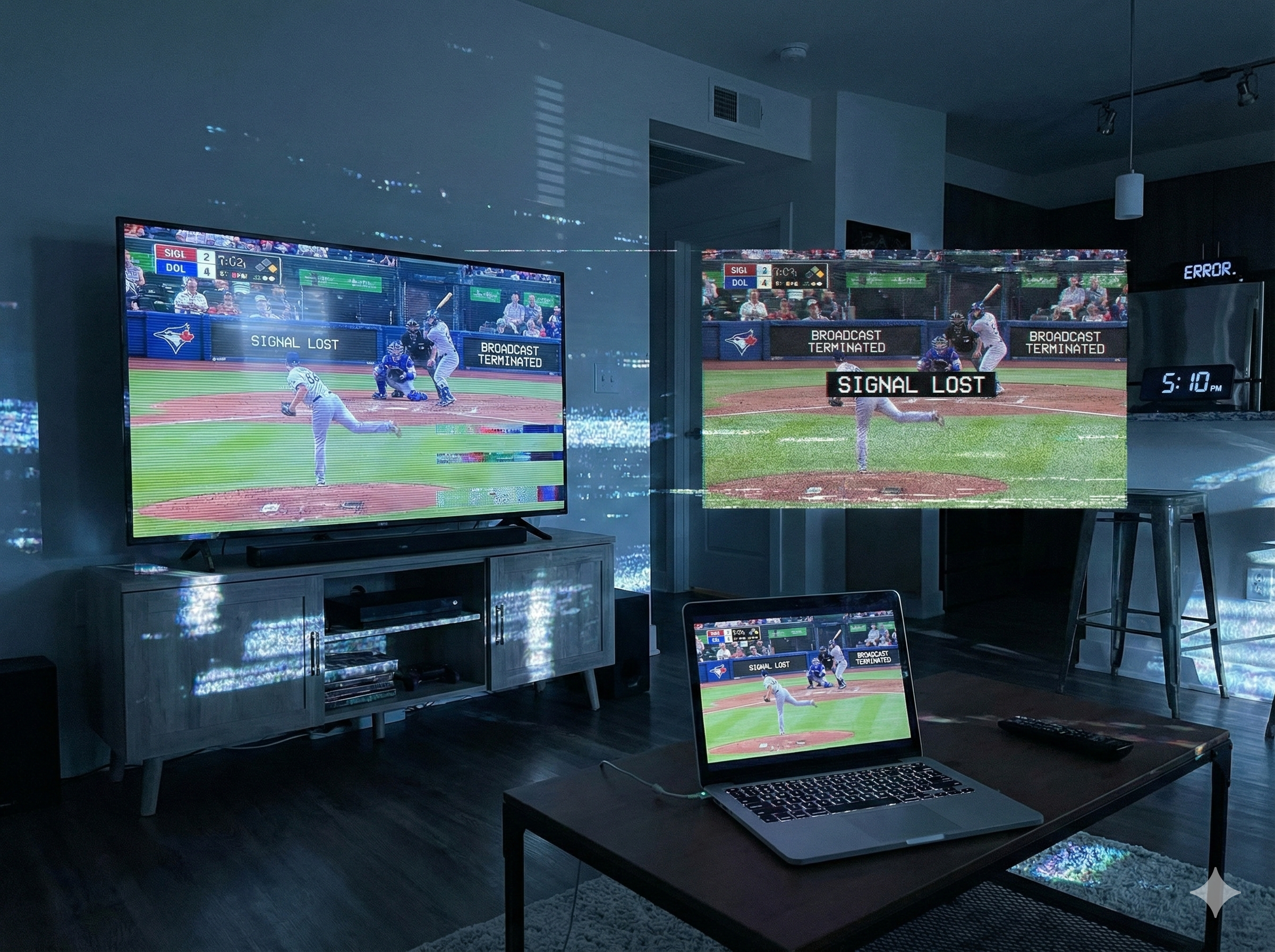
If you listen closely, you can hear the sound of the inevitable finally arriving. It sounds a lot like nine Major League Baseball teams simultaneously slamming a door.
The news that broke this week—that nearly a third of MLB’s franchises have terminated their contracts with Main Street Sports Group—is shocking only to those who haven’t been paying attention to the slow-motion car crash that is the regional sports network (RSN) business. For the rest of us, the reaction is less a gasp of surprise and more a weary nod of acknowledgment. The “FanDuel Sports Network,” as it is currently branded, is effectively dead on arrival, and we are witnessing the messy, painful, and absolutely necessary end of the linear cable television era.
But before we dance on the grave of the traditional RSN, we need to make one thing abundantly clear, because branding is a powerful drug and confusion is rampant.
Let’s get the taxonomy straight immediately: This meltdown has absolutely nothing to do with FanDuel.
FanDuel is a sportsbook. They are a massive, cash-printing machine that paid for the right to slap their logo on these channels in a naming-rights deal, much like an insurance company puts its name on a football stadium. If the roof of the stadium collapses because of poor engineering, you don’t blame the insurance company selling policies in the lobby; you blame the architect.
In this scenario, the architect is Main Street Sports Group, the entity formerly known as Diamond Sports Group, which was formerly a subsidiary of Sinclair. FanDuel just bought the sticker on the bumper of a car that was already careening off a cliff. They are the hood ornament on the Titanic. The actual engine failure belongs entirely to Main Street/Diamond, a company that has been trying to bail out a sinking ship with a thimble for the better part of three years.
To understand why this collapse is happening now, in January 2026, we have to look back at the original sin. When Sinclair purchased these regional networks from Fox/Disney back in 2019, they saddled the acquisition with nearly $9 billion in debt. In the world of corporate finance, that is the equivalent of trying to swim the English Channel while wearing a suit of armor.
The premise of the purchase was based on a worldview that expired around 2015: the idea that cable subscribers would continue to pay bloated bundle fees in perpetuity. They bet on the status quo right as the status quo was packing its bags and moving to Netflix.
Main Street’s emergence from bankruptcy in early 2025 was hailed by some corporate lawyers as a victory. In reality, it was a zombie resurrection. They shuffled out of the grave, secured a naming rights deal with FanDuel to generate some quick cash, and tried to pretend that the fundamental economics of their business hadn’t evaporated.
The report that Main Street will dissolve after the current NBA and NHL seasons is the least surprising “scoop” in sports business history. The failed talks with DAZN—who reportedly ran for the hills when Main Street demanded teams take massive pay cuts—prove that there is no white knight coming. The math simply does not work. You cannot service billions in debt and pay teams hundreds of millions in rights fees when your subscriber base is being halved every few years.
The Great Correction
This brings us to the nine teams jumping ship: the Braves, Reds, Tigers, Royals, Angels, Marlins, Brewers, Cardinals, and Rays.
For years, sports fans have complained about the “RSN bubble,” usually in the context of blackouts or carriage disputes. But we often ignored the flip side: the RSN model was artificially inflating the economics of baseball. Those massive cable deals, which accounted for 20% to 30% of team revenues, were essentially a tax levied on non-sports fans. For decades, grandma in Boca Raton was paying $8 a month for a sports channel she never watched so that the Marlins could sign a shortstop.
That model is dead. The termination of these contracts is the market correcting itself.
Is it painful? Absolutely. The “linear-cable model” crumbling means that the guaranteed, fixed income teams relied on is gone. MLB’s direct-to-consumer options (MLB.tv) and local streaming setups are fantastic products, but they operate on a transactional basis. You only get money from the people who actually watch the games. It turns out, when you can’t subsidize your payroll with money from people who don’t care about baseball, you have less money.
This will have immediate, chilling effects on free agency. We are already seeing the “payroll disparity concerns” mentioned in the news reports. But this isn’t a disaster; it’s a reckoning. The sport is moving from a wholesale model (selling bulk access to cable providers) to a retail model (selling directly to you, the fan). The transition period is just incredibly messy.
Rob Manfred’s Victory Lap
Credit must be given where it is due: Major League Baseball saw this coming. Commissioner Rob Manfred, often the villain in the eyes of the public, has played this hand perfectly. By setting up the local media department two years ago, MLB built the lifeboats before the ship sank.
The league currently handling the D-backs, Padres, Guardians, Rockies, Twins, Mariners, and Nationals—and now poised to take on nine more—is the soft launch of the inevitable future: The National Umbrella.
The report notes that none of the new deals Main Street signed extended beyond 2028. That is the magic number. MLB’s clear goal is to aggregate the rights of all 30 teams. Imagine a world with no blackouts. Imagine a world where you buy one subscription and get everything, regardless of where you live. That is the Holy Grail of sports media.
The downfall of the FanDuel Sports Network (Main Street) accelerates this timeline. It forces the issue. Instead of a slow bleed where teams trickle away from RSNs one by one over a decade, the dam has broken. MLB is now, by default, a massive media broadcaster.
There is a dark comedy in watching Main Street struggle. They alienated Comcast, they alienated fans, and they alienated the teams. They operated with the arrogance of a monopoly without the leverage to back it up.
The fact that they tried to sell to DAZN at the last minute, asking teams to take pay cuts to facilitate the sale, is the corporate equivalent of asking your ex to co-sign a loan for your new apartment. The audacity is almost impressive.
Main Street’s spokesperson said they remain in “active dialogue.” In PR speak, “active dialogue” usually means “our lawyers are screaming at their lawyers.”
Where do we go from here, baseball fans?
Short term: Chaos. Fans of the Braves, Cardinals, and Tigers might have a confusing few weeks figuring out exactly which app or channel to tune into come Opening Day. Payrolls will tighten. Agents will scream.
Long term: Clarity. This is the necessary forest fire that clears the brush for new growth. The RSN model was a relic of the 1990s trying to survive in the 2020s. It was a fax machine in an email world.
The consolidation of rights under MLB is the only logical conclusion. It simplifies the product for the consumer and, eventually, will stabilize revenue for the teams, albeit at a lower baseline than the golden era of the cable bundle.
The FanDuel Sports Network name will eventually be peeled off the studio walls. Main Street Sports Group will become a footnote in business school textbooks about the perils of leveraged buyouts. And baseball? Baseball will be fine. It will just be streamed, direct to you, without the middleman trying to squeeze a billion dollars out of the signal.
The house always wins, but Main Street forgot they weren’t the house—they were just the table where the game was played. And the game has moved on.
About the Author
